


SangHealth

Health systems are bleeding out.
We're here to help.

Let's level up your medical practice.

Request to learn more →

What is PBM?

Patient blood management (PBM) means managing and preserving a patient's own blood and treating it as a first-class organ.

  • Treat anemia early
    before surgery or high-risk care
  • Minimize blood loss
    and bleeding
  • Transfuse to the evidence
    not out of habit

Our role?

We exist to make proactive patient blood management a cornerstone of clinical excellence, operational efficiency, and financial sustainability.

SangHealth is PBM in a box.

A strong program takes more than a blood bank. We bring everything a hospital or health system needs to start, run, and sustain one.

People

PBM nurse specialists and transfusion medicine physicians who work alongside your clinicians, or lead the program for you.

Policies

Transfusion guidelines, anemia management, bloodless medicine, and special population policies, tailored to your organization.

Processes

Committee reviews and approvals, staff training, accreditation prep, and the day-to-day routines that keep a program running.

Tools

A secure platform with our knowledge base, policy drafting, team coordination, and program monitoring built in.

What a well-built program delivers.

Reduce complications and improve patient outcomes

Every transfusion carries risk, and many can be avoided. An avoided transfusion is an avoided complication.

28%
lower in-hospital mortality
21%
fewer hospital-acquired infections
15%
shorter length of stay

Leahy MF et al., Transfusion, 2017. 605,046 patients across four hospitals in Western Australia.

Featured research from our Chief Medical Officer
ABO Nonidentical Transfusions and Mortality in Patients Undergoing Massive Transfusion Protocol
Blumberg N, Henrichs K, Masel D, Vella M, Gestring M, Lippa A, Nguyen PL, Asante A, Cahill C, Refaai M. JAMA Surgery, 2026.
Read the paper on PubMed →

Decrease operational costs

$2.9-7M

saved on blood each year at leading programs

  • $500 to $1,200 all-in cost for every unit transfused
  • About $16,000 for the average 30-day readmission
  • Shorter stays free up beds for other patients

Frank SM et al., Anesth Analg, 2024 (Johns Hopkins). Warner MA, SABM Annual Meeting, 2026 (Mayo Clinic). AJMC; Joint Commission Journal. Ghabowen et al., Healthcare, 2024.

Expand the patient populations you serve

$5M a year

in margin from Johns Hopkins' bloodless medicine program

  • 1.2M Jehovah's Witnesses in the U.S. alone
  • About 40% of surgical patients arrive anemic
  • About 2,500 patients regained at our Chief Medical Officer's center after leaving for bloodless care elsewhere

Frank SM et al., Anesth Analg, 2024. PBS, 2014. ASH. Patient example from the SangHealth clinical team.

Take advantage of CMS reimbursements

1% to 3%

of Medicare payments ride on measures PBM improves

  • 1% lost by the worst quartile under the Hospital-Acquired Condition Reduction Program
  • 2% of DRG payments tied to safety and spending under Value-Based Purchasing
  • 3% more at stake on readmissions
  • Transfusion is a cost inside the DRG. Anemia care is billable outpatient work.

CMS HAC Reduction, Hospital Value-Based Purchasing, and Readmissions Reduction programs.

PBM is a well-evidenced practice.

See some of our publications below.

Built by people who have their fingers on the pulse.

Sarah Walbolt, BSN — Chief Executive Officer
Association for the Advancement of Blood and Biotherapies (AABB)Society for the Advancement of Patient Blood Management (SABM)
The University of UtahProMedica

Sarah Walbolt, BSN

Chief Executive Officer

Nurse Executive and PBM specialist with extensive experience implementing programs across major health systems. She serves on the Board of Directors for the Society for the Advancement of Patient Blood Management (SABM) and PBM standards committee for the Association for the Advancement of Blood and Biotherapies (AABB). Co-creator of the podcast Let's Talk PBM.

Christine Cahill, MS, RN — Chief Revenue Officer
Mayo ClinicSociety for the Advancement of Patient Blood Management (SABM)
University of Rochester Medical CenterRochester Regional Health

Christine Cahill, MS, RN

Chief Revenue Officer

Healthcare growth strategist with extensive experience developing programs from the ground up, transforming innovative clinical concepts into scalable, revenue-generating service lines. Skilled in driving market expansion, operational excellence, stakeholder alignment, and long-term program sustainability within complex healthcare organizations.

Dr. Majed Refaai — Chief Medical Officer
University of Rochester Medical CenterSociety for the Advancement of Patient Blood Management (SABM)
UT Southwestern Medical CenterWashington University in St. Louis

Dr. Majed Refaai

Chief Medical Officer

Nationally recognized leader in PBM and transfusion medicine, with a proven track record of improving patient outcomes, reducing unnecessary transfusions, and optimizing healthcare resources through evidence-based innovation. He brings the credibility and industry influence needed to accelerate adoption of transformative AI solutions that advance blood management.

SangHealth's AI and platform is built by Sparkworks

Our team's impact is magnified by our platform.

Our clinicians don't show up empty-handed. They bring a proprietary, AI-powered platform built from years of running PBM programs, and it comes with our service.

Your clinicians coordinate and collaborate with us in one secure, easy to reach place. Tools for policy review, project coordination, and secure communication are created around it. Our platform is HIPAA-compliant and employs enterprise-grade security and infrastructure practices.

In the knowledge base
  • PBM best practices from AABB, SABM, and WHO standards, and decades of clinical experience from the SangHealth team
  • Clinical evidence reviewed and curated by our medical team
  • Order sets and protocols leveraged in real clinical settings
  • Policy templates for clinical practices and more
  • Resources and other documents for operational processes and more
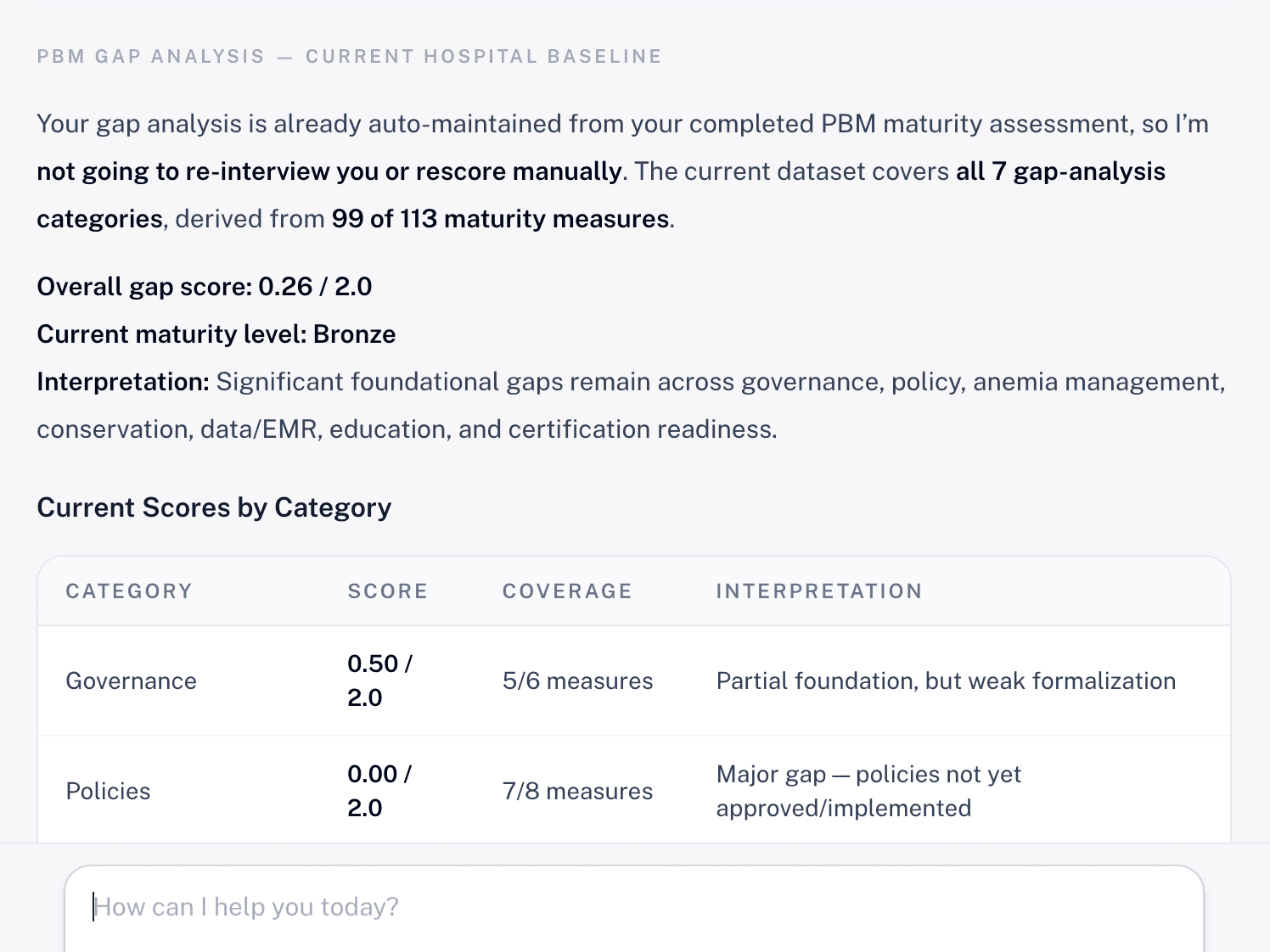
PBM gap analysis showing a hospital's current baseline
Gap assessment. See where your program stands against the standards.
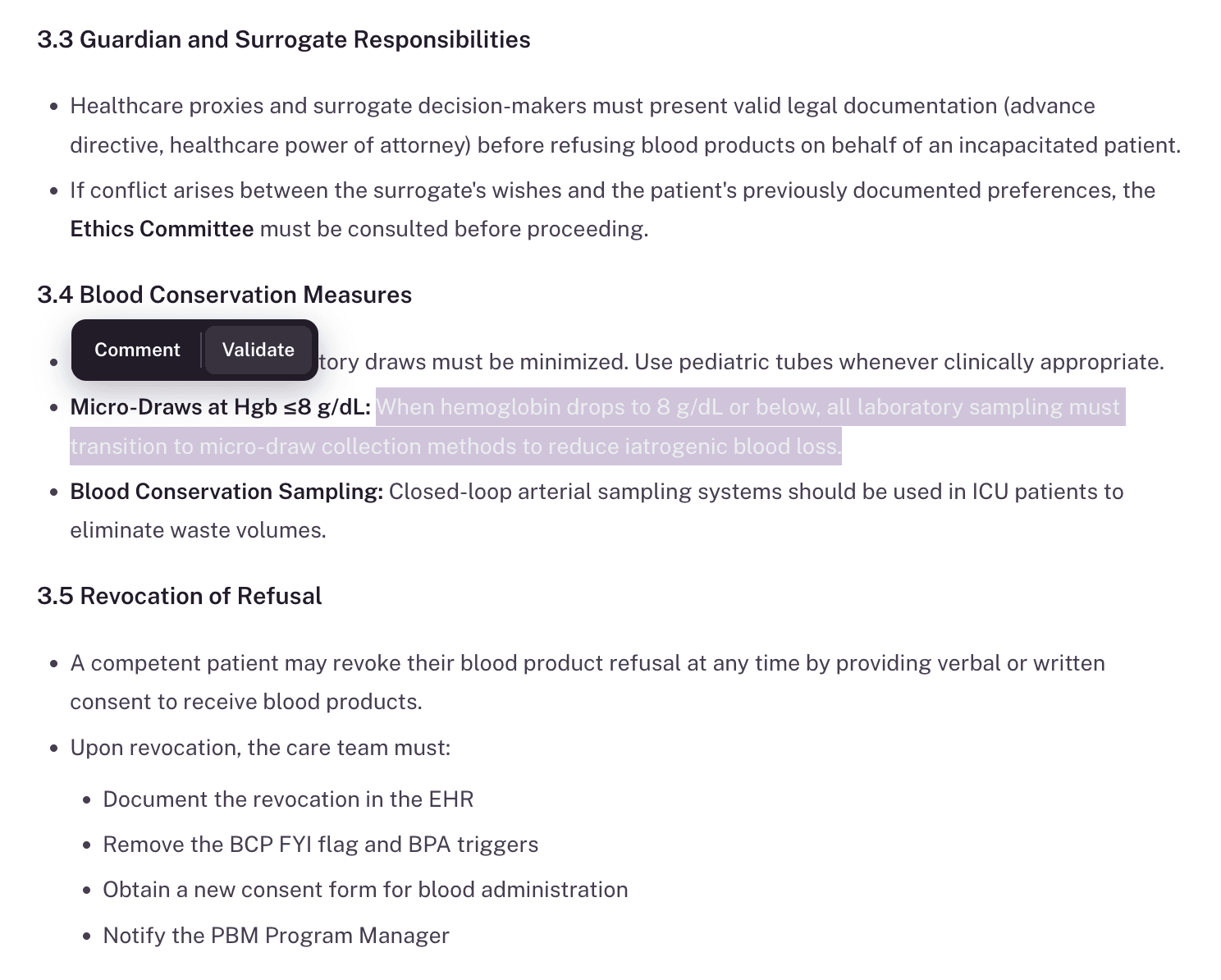
Policy drafting with inline comment and validate controls
Policy drafting and review. Draft, comment, and approve with the evidence behind every line.
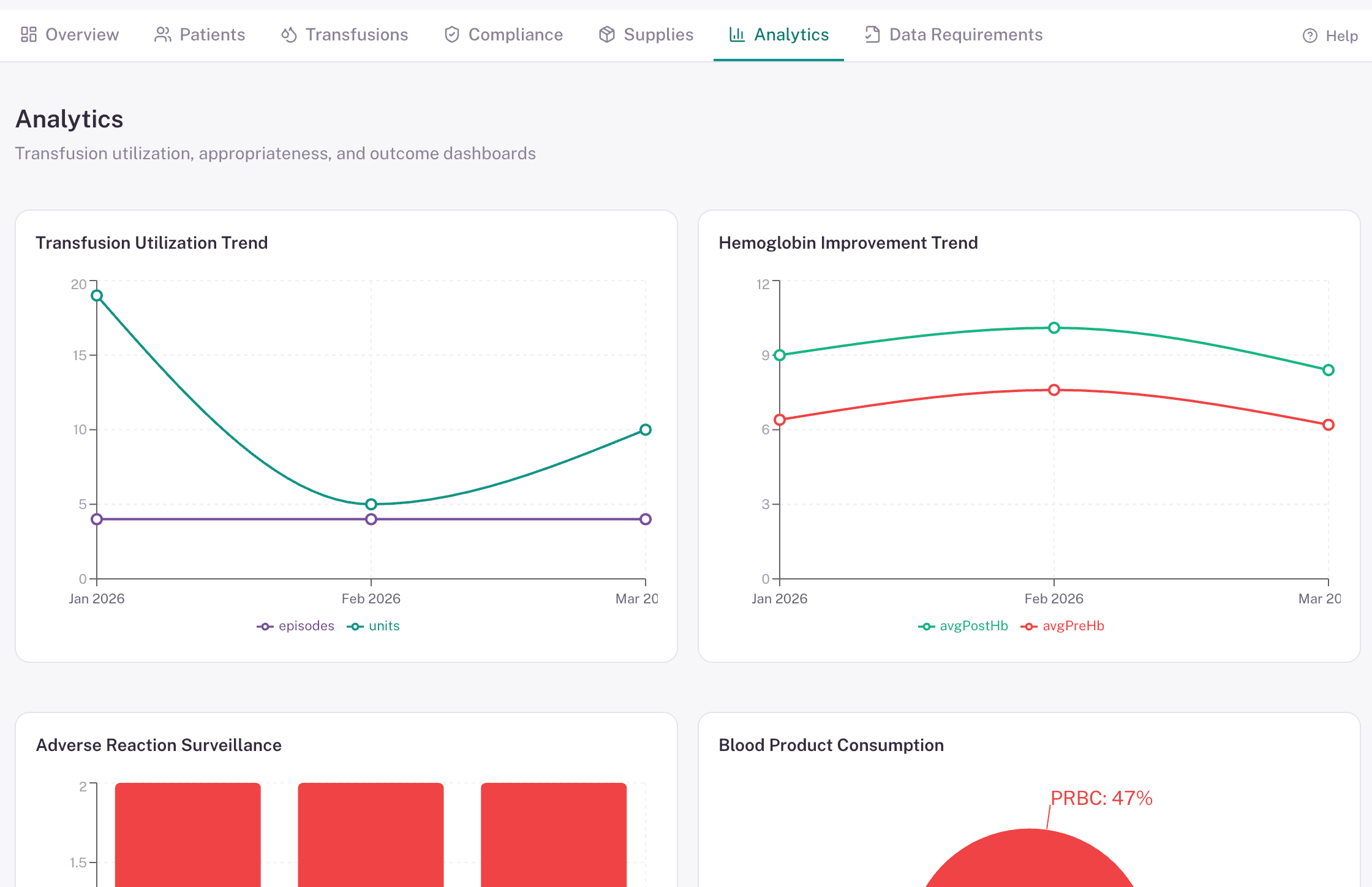
Analytics dashboards for transfusion utilization, appropriateness, and outcomes
Surveillance and monitoring. Track transfusion practice once your program is live.

How is our AI different?

We built and curated a proprietary knowledge graph based on global best practices and our clinical experience. This foundation allows us to create highly precise, traceable AI systems for our customers and partners.

Two ways to serve you.

Both come with our clinicians and our platform. The difference is who leads your program.

Co-managed

You lead. We back you up.

Best for

Organizations that have, or are hiring, their own PBM manager or coordinator and want expert support, structure, and tools behind them.

  • Your named PBM manager, supported by our team
  • Help with transfusion guidelines
  • AABB accreditation preparation
  • Staff training and ongoing support
  • Platform access: knowledge base, policy generation, reviews and approvals, coordination
  • No patient data required
  • Org-specific knowledge graph built on SangHealth PBM Standard (not included)
  • Transfusion surveillance and monitoring (not included)
Fully managed

We run your program.

Best for

Organizations without dedicated PBM staff, or that want an experienced team accountable for the program from day one.

  • SangHealth serves as your named PBM manager
  • Help with transfusion guidelines
  • AABB accreditation preparation
  • Staff training and ongoing support
  • Platform access: knowledge base, policy generation, reviews and approvals, coordination
  • Clinical data handled under a BAA
  • Org-specific knowledge graph built on SangHealth PBM Standard: transfusion guidelines, anemia management, bloodless medicine, special populations
  • Transfusion surveillance and monitoring

Both options are available for a single hospital or a multi-site health system. Optional add-ons include mobile apps and direct EHR integration with order sets.

See what a PBM program could look like at your organization.

Leave a message below and our team will be in touch.

Request to learn more →